2nd Annual ACAMS Conference in Toronto on Anti-Money Laundering

By Christine Duhaime | June 3rd, 2014

The ACAMS 2nd Annual AML & Financial Crime Conference Canada in Toronto on June 9-10, 2014 has an interesting and exciting list of speakers and topics.

Highlights of this year’s program include:

  • Corruption Presentation – Interpol’s Michel Girodo.
  • Critical Guidance on Anti-Money Laundering Laws – Jamal El-Hindi, Associate Director, Policy Division, FinCEN.
  • Anti-Bribery Update – John Boscariol, Karim Rajwai, Royal Bank and Eric Slinn, RCMP.
  • Tax Evasion – Michael Donovan, TD Wealth, Sylvain Perrault, Desjardins Group.
  • Managing Money Laundering Risks with Virtual Currencies – Kieran Beer, Moneylaundering.com, Christine Duhaime, and Lester Joseph, Wells Fargo.

Inquiry in Canada hears that P3 infrastructure hospital project is “biggest corruption fraud” in Canadian history

By Christine Duhaime | June 1st, 2014

According to law enforcement testimony at Canada’s Charbonneau Commission heard last week, the $2 billion public-private partnership (“P3“) infrastructure project in Canada to build the McGill University Hospital Centre (“MUHC“) is the largest corruption fraud case in the history of Canada.

It’s also the first money laundering P3 infrastructure case in Canada.

In reality, it appears to be the largest P3 infrastructure corruption and money laundering case in the world so far, not just Canada.

The Charbonneau Commission in Canada is looking at corruption in the province of Quebec, particularly the construction industry.

In 2010, SNC-Lavalin was awarded the contract to design, build and manage the MUHC, at that time one of the largest hospital infrastructure projects in the world. According to law enforcement, the Canadian engineering firm paid $22.5 million allegedly as a bribe to the MUHC’s CEO, Dr. Arthur Porter, and perhaps others, to secure the contract.

This week, SNC-Lavalin allegedly asked Infrastructure Quebec for an additional $191 million to complete the MUHC, which the government has said it will not pay.

Foreign corruption offences

The payment of bribes to secure a public contract is illegal in Canada and constitutes a criminal offence under the Criminal Code and the Corruption of Foreign Public Officials Act, the proceeds of which are proceeds of crime. According to the American Society of Engineers, the OECD and Transparency International, financial losses from corruption in infrastructure projects range from between 10% – 30% of project costs.

In February 2014, Canada’s former Finance Minister, the late Jim Flaherty, said that infrastructure in Canada had “fallen prey to corruption” and with respect to the billions of dollars approved for infrastructure projects in Canada, stressed that the federal government did not want any “corruption” or “inappropriate behaviour” with respect to infrastructure in Canada.

Secret contract

The Charbonneau Commission released a copy of several versions of a contract allegedly entered into between SNC-Lavalin and a company registered in a tax haven shielded by beneficial ownership laws allegedly controlled by Porter for the payment of $30 million to secure deals. Despite the alleged illegal nature of the contractual arrangement, the contract specifically referenced the Corruption of Foreign Public Officials Act and the prohibition against accepting bribes. In an appendix to the contract, it was represented that the contractor was not a politically exposed person in government.

Politically exposed person

However, Porter and his spouse lied. They were politically exposed persons inside and outside of Canada under anti-money laundering law by virtue of Porter’s position as head of Canada’s SIRC, and as special ambassador to Sierra Leone. $22 million was wired to Porter’s company in a tax haven.

Pressure on politicians to approve contracts

According to testimony of Normand Bergeron, the former president of Infrastructure Quebec, formerly PPP Quebec, there were financial crime red flags in respect of the MUHC project, starting with what he described as enormous pressure placed on him and other government agencies to approve SNC-Lavalin as the proponent by Porter and a Canadian senator. An executive at SNC-Lavalin allegedly earlier told the Charbonneau Commission that the engineering firm secretly obtained copies of the competitor’s drawings in advance to prepare a better bid.

Lawyers from the Charbonneau Commission questioned Infrastructure Quebec on transparency in the P3 process, and in particular, this case.

Infrastructure Quebec says it used to believe P3 projects were corruption-free

Bergeron testified that Infrastructure Quebec believed that P3 infrastructure projects were corruption-free. Commission President Charbonneau had this to say: “Avec toute l’experience que vous aviez au sein de la fonction publique, vous trouviez pas qu’il y avait quelque chose qui tournait pas rond? Vous etes quand meme gardien des regles et du processus.”

Bergeron said that Infrastructure Quebec assumed that Porter had integrity because he appeared to be a knowledgeable expert who was fully engaged in the procurement process with political connections.

Red flags

According to research from, inter alia, OECD and FATF, P3 infrastructure projects with the following characteristics are more prone to corruption:

  • Lack of due diligence by financiers on, inter alia, financial crime including involvement of politically exposed persons, domestic and foreign.
  • Large projects with greater complexities or novel features.
  • Lack of transparency in the process.
  • Too much discretionary decision-making authority exercisable by several officials.
  • Unclear rules and regulations in respect of financial control and audits.
  • Lack of awareness of financial crimes or enforcement in respect thereof, in particular lack of resources to prosecute financial crimes.

The FATF has determined, with respect to PEPs, that there is a greater risk with persons involved in the following:

  • Public procurement;
  • Energy, construction, gaming, mining and defense sectors;
  • Large infrastructure projects; and
  • Financing of government projects.

And those who have political connections.

Canadian companies more risky for financial crime?

Whether Canada’s infrastructure sector really has “fallen prey to corruption” as the federal government stated a few months remains to be seen but there is no doubt Canada’s reputation for business ethics has diminished on the world stage as a result of the MUHC case and other high-profile cases.

Canadian companies dominate the World Bank’s corruption list of companies banned from obtaining funding by the World Bank and the Basel Institute on Goverance ranks Canada as more risky than Egypt, Peru, Romania, Hungary Chile and Jamaica for a range of financial crimes factors, including money laundering and corruption.

The Charbonneau Commission is expected to issue recommendations to mitigate against corruption in Canada next year which is expected to help rebuild Canada’s reputation. In the meantime, monitoring for the red flags above, having transparency and a regulatory framework that all parties can trust would mitigate against financial crime.
China seeking advice on deporting 1,000 EB-5 immigrants from US and recover assets in what may be the first cases of G20 “denial of safe haven” policy

By Christine Duhaime | May 29th, 2014

Removal of Foreign Nationals & Asset Recovery

According to several news reports, such as the one here, the government of China is in discussions with the US government (and firms) regarding the process to deport or extradict former Chinese nationals believed to have immigrated with billions of dollars in proceeds of crime from corruption.

There is apparently a list of over 1,000 such Chinese nationals, all former public officials, who obtained immigration status in the US under the US EB-5 program.

Politically Exposed Persons

Discussions have also apparently centered around the fact that the list of 1,000 are all politically exposed persons (“PEP“) in money laundering law and it is likely that additionally, there have been discussions regarding potential exposure of American banks and other advisors to asset recovery repatriation claims in cases where services were provided to EB-5 PEP applicants from China without complying with PEP rules.

Possible first cases of Denial of Safe Haven policy

Last year at the G20 meetings, the government of China signed on to the global “denial of safe haven” policy proposed by the Anti-Corrution Working Group. The denial of safe haven policy is designed to ensure that countries are not facilitators of financial crimes committed by high net worth foreign nationals by giving them and the proceeds of crime they bring with them, a safe haven. Under the “denial of safe haven” plan, in cases where foreign nationals have already immigrated, the accepting country (in this case the US), would agree to repatriate assets and use deportation, rather than extradition, to return foreign nationals to their country of origin for prosecution. Foreign nationals who export proceeds of crime usually export funds years in advance and park them in a transitory jurisdiction pending immigration approval. Asset recovery usually involves tracing funds through several countries for repatriation.

Canadian court dismisses charges against 3 jobless people over $24 million in unexplained cash

By Christine Duhaime | May 29th, 2014

Here’s an interesting story about how a Court dismissed a $24 million money laundering case because, in the Court’s view, the evidence did not prove that three unemployed siblings who funneled millions of dollars in cash through a money services business in Vancouver were laundering proceeds of crime. Even though one of the siblings suggested to the Court that he was evading taxes.

The prosecution’s theory was that the siblings were engaged in the illegal drug grow-op business and transported and sold illegal drugs they manufactured to the U.S. over a two year period.

Over $24 million in cash was funneled by the accused, and exchanged from U.S. to Canadian currency. One of the accused was convicted previously of operating an illegal drug operation.

The salient facts and findings of the case, R v. Nguyen et al, 2014 BCPC 0095, are as follows:

  • Nam Hoang Nguyen (“Nam“) funelled $1.3 million cash through two money services business, they owned or controlled called Trans Vietnam Money Service in a two week period. 
  • Thi Ngoc Bich Nguyen (“Thi“) funneled $15 million cash through a Calgary based MSB over a two year period.
  • Thu Thi Nguyen (“Thu“) funelled $7.2 million cash though the Calgary MSB over a two year period.
  • The $24 million cash funneled through the Calgary MSB by the accused was inconsistent with, and not supported by employment.
  • In 2003, Thi reported to tax authorities that her income was $21,000; Thu reported losses of $68,000; and Nam reported income of $19,000.
  • Despite having no significant income, Thu owned a BMW and a house but couldn’t explain how that was possible.
  • One of the accused, Thi, had $168,000 in her possession when arrested in $100 bills, (a sign of refining in money laundering law).
  • Nam appears to have engaged in some level of tax evasion (a predicate office to the money laundering charge) and submitted that he exchanged at least $1.3 million cash without reporting it to tax authorities.
  • Nam owned and operated the Trans Vietnam Money Service MSB and failed to file any reports to FINTRAC over any transactions that took place at that MSB.
  • The Calgary based MSB that exchanged the $24 million cash failed to file any suspicious transaction reports with FINTRAC on either the Trans Vietnam Money Service or the three unemployed defendants.
  • Nam argued, which the Court appears to have accepted, that the employees at the Calgary MSB which exchanged the $24 million cash without filing any suspicious reports,  failed to alert him, as the owner of the Trans Vietnam Money Service MSB, of the reporting obligations to FINTRAC pursuant to the Proceeds of Crime (Money Laundering) and Terrorist Financing Act (“PCMLTFA“) and that his failures to report transactions with FINTRAC on behalf of Trans Vietnam Money Service was consistent with tax evasion, not money laundering. (the proceeds from tax evasion is proceeds of crime).
  • Nam was previously convicted of manufacturing illegal drugs and that was immaterial for the Court to conclude that there was a connection between the criminal conduct (the illegal drug manufacturing in Vancouver) and the proceeds of crime from that illegal activity for the purposes of a money laundering conviction. (the proceeds from illegal drug manufacturing are proceeds of crime).
  • (Although immaterial), Thu argued, which the Court appears to have accepted, that there was no evidence at trial establishing that MSBs in Canada were aware of the requirements of the PCMLTFA.
  • There was evidence linking Thi and Thu to homes that were linked to the manufacture of illegal drugs.
  • The Court held that although the number of transactions funnelled through the Calgary MSB by the accused was “suspicious” and the accused had no sources of income, there was insufficient evidence to establish that $24 million cash was proceeds of crime because, inter alia, prosecutors did not know where the cash originated or where the cash went.

One of the surprising aspects of the case is the admission of tax evasion which is sufficient to convict but was not in this case.

The case involves stellar police investigation work on drug trafficking and money laundering and yet that too was unfortunately not credited in the judgment.

Also surprising is that, recollecting that one of the accused owned one of the MSBs, it appears permissible for a MSB to fail wholesale to comply with the PCMLTFA and avoid criminal conviction.

Billionaire banker executed in $2.6B money laundering case and two co-defendants in Canada

By Christine Duhaime | May 24th, 2014

Billionaire money launderer executed

According to the Washington Post, billionaire banker Mahafarid Amir Khosravi was executed today in Tehran for bank fraud and money laundering. He is alleged to have forged letters of credit with the assistance of bank managers from the Melli Bank to start a private bank called Aria Bank.

Iranian courts found that US$2.6 billion was embezzled from the Melli Bank, Iran’s largest bank for the benefit of Khosravi and his co-defendants.

Lawyer sentenced to death for assisting money laundering

Khosravi’s lawyer, Behdad Behzadi, was sentenced to death by an Iranian court in connection with his role in the scandal.

Two accused in Canada

One of the Melli Bank directors and managers who is charged with having assisted Khosravi, Mahmoud Reza Khavari, was granted Canadian permanent residence. In 2005, he apparently was granted citizenship of Canada while in Iran.

In 2011, according to the Washington Post, after the arrest of several defendants in the case, Khavari bought a first class ticket and fled to Canada. He is among 22 people being sought by Iran’s chief prosecutor. In 2007, he allegedly bought a $3 million mansion close to the Bridle Path, one of Toronto’s ritzy areas.

Khavari was on Interpol’s Wanted List for charges of taking bribes and aiding and abetting embezzlement and fraud. Earlier this year, Tehran announced that it was sending a special group of law enforcement officers to Toronto to search for Khavari.

In February, 2014, the Canadian government is alleged to have informed the Iranian police that Khavari fled Canada to South America. However, two weeks ago, Iranian police subsequently announced that Canadian authorities confirmed that Khavari had not fled to South America and was still in Canada (he’s in Toronto).

According to a member of Canada’s Parliament, James Bezan, another Iranian charged in connection with the $2.6 billion Melli Bank fraud, corruption and money laundering case, Mehregan Amirkhosravi, also fled from Iran to Canada and lives in Montreal.

It is unclear how Khavari was able to buy houses and open and maintain bank accounts in Canada when he and his family were foreign politically exposed persons and Canadian economic sanctions probably prevented the transfer of any assets or money from him to Canada when he fled.

The Iranian government views the alleged lack of cooperation from Canada on the Khavari file as one of hostility towards Iran.

Updates on file

On August 5, 2014, the Iranian government said that it is in talks with Canada to extradite Khavari to Iran and complained that Canada has been uncooperative.

On September 28, 2014, Iranian officials said Canada finally admitted that Khavari is in Canada.

On March 4, 2015, the Iranian police announced that the file had been referred to the Canadian judiciary but it is unclear what this means. It suggests that the formal extradition request of Khavari has been filed in Court but that would mean he was arrested, or sought to be arrested, in Canada. It is likely that the Iranian government simply made a request to the Canadian government, rather than through the Court system, for his removal.

As nations use money laundering laws to tackle tax fraud, cross-border cooperation is key

By Christine Duhaime | May 22nd, 2014

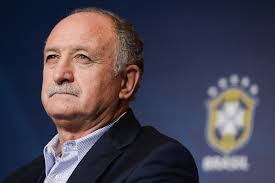
images

Our interview on a podcast with the Association of Certified Crime Specialists regarding the criminal investigation into Brazilian soccer coach Luiz Scolari by Portuguese authorities for money laundering arising from tax fraud.

“The head coach of Brazil’s national soccer team has one more thing to worry about before the World Cup held in his home state. Besides leading his team to victory in the world’s largest soccer tournament, Luiz Felipe Scolari is now under criminal investigation in Portugal for suspected tax fraud and money laundering.

Scolari allegedly used a network of companies in the Netherlands, the UK and the Virgin Islands to transfer 7.4 million euros in undeclared income from Portugal to a bank in Miami. Portugal’s tax authorities requested US assistance in the case in 2012, but it was just last week that a US district judge approved the request, allowing Portugese law enforcement access to accounts in the US.

This case presents an example of how Portugal is stepping up efforts against tax evasion, and also highlights two trends in tax enforcement: increased cooperation between countries, and the use of money laundering laws to target tax crimes.

Listen to the podcast here.”

US Federal Reserve says Bitcoin will force change but has serious risks

By Christine Duhaime | May 20th, 2014

Bitcoin’s disruptive technology will force banks to change and adapt but some issues identified including regulatory arbitrage and consumer protection

The Board of Governors for the US Federal Reserve published minutes of their recent meeting on a wide-range of economic issues, including Bitcoin.

Positive Aspects

The Board noted several important and positive aspects of Bitcoin, namely:

  • Bitcoin will force traditional payment processors to adapt and respond.
  • Existing financial institutions and payment processors only have a footprint advantage over Bitcoin that is confined to the developed world. Bitcoin, in contrast, enables cheap, international remittances to the developing and developed world and to unbanked populations.
  • Bitcoin fosters financial inclusion.
  • Consumers will gravitate to Bitcoin if they perceive its advantages of faster settlement and geographic flexibility that exceed the alternatives (i.e., traditional banks).
  • The disruption caused by Bitcoin to traditional commerce is a boon, rather than a threat.
  • Its global transmissibility will open new markets for businesses and will drive capital from the developed to the developing world.
  • Illicit applications of Bitcoin are rampant but not endemic.

Bitcoin Concerns

Not all the commentary was positive. The Board cited four main areas of concern with Bitcoin:

  1. Consumer Protection
  2. Illicit Uses
  3. Balkanization
  4. Currency Control Circumvention

1. Balkanization

Perhaps the most interesting point was the recommendation that to avoid Balkanization (fragmentation), and preempt regulatory arbitrage (which is the practice of capitalizing on regulatory loopholes), there needs to be consistency across geographies. The recommendation suggests to us that there will come a time when the UN, likely UNCITRAL, becomes involved in regulating Bitcoin. UNCITRAL is the United Nations Commission on International Trade Law. It is mostly known for its work in drafting international commercial arbitration rules.

2. Illicit Uses

To address illicit uses of Bitcoin as a payment method and for purchasing unlawful goods and services, the Board suggested that transparency is necessary and thus anti-money laundering procedures including the requirement to report suspicious transactions and oversight over transactions is required.

3. Consumer Protection

The Board identified lack of consumer protection as the most pressing issue in Bitcoin, although it failed to identify the key consumer protection issue, namely the failure to warn consumers of the risks associated with loss of private keys. It recommended supervision of Bitcoin exchanges, regulatory oversight over storage of wallets and dispute resolution mechanisms to resolve disputes.

4, Circumvention of Currency Controls

The Board highlighted what few countries appear to have yet realized except China, Russia and the US, which is that Bitcoin is ideal for circumventing currency restrictions – in other words it is the best method available today to remove funds illicitly from a country which has currency controls in place, such as China. The Board astutely noted that the voluminous transactions in Bitcoin in China is evidence of the circumvention of currency controls and also noted its recent use in Cyprus for the same reason. The volume of transactions in China, however, is also evidence of the fact that, according to anecdotal evidence, Chinese public officials are asking to be paid bribes in Bitcoin because of its non-tracability.

You can read the full text of the minutes here – the portion on Bitcoin is at the end.

Bitcoin in Amsterdam

By Christine Duhaime | May 13th, 2014

We are participating in three sessions on digital currencies (and Bitcoin) in Amsterdam this month for those interested in joining:

  • At the Bitcoin Foundation Conference on May 16, 2014 on a panel discussing anti-money laundering chaired by Adam Shapiro, Director of Promontory Financial Group with:
    • Dirk Haubrich, Head of Consumer Protection and Financial Innovation at European Banking Authority;
    • Greg Kidd, Chief Risk Officer of Ripple Labs; and
    • Juan Llanos, EVP of Unidos.
  • At the Association of Certified Anti-Money Laundering Specialists Netherlands on May 15, 2014 discussing policy, regulatory and legal issues related to digital currencies and Bitcoin including insight into the Canadian regime. Co-presenters are:
    • Andries Doets, financial regulatory lawyer with Finnius in Amsterdam; and
    • Bobby McFaul, law enforcement officer, Fiscale Inlichtingen- en Opsporingsdienst (Fiscal Information and Investigation Service) (FIOD) in Amsterdam.
  • At the Dutch Ethereum and Bitcoin Meet-up in Amsterdam on May 14, 2014 with several presenters discussing cutting edge digital currency issues including:
    • Peter Todd, Chief Scientist of Mastercoin, who will discuss the Darkweb; and
    • Jan Bergstra, Director of Informatics Institute of the University of Amsterdam, who will discuss Bitcoin and Islamic Finance.

JP Morgan closing accounts of foreign government officials in US over compliance costs

By Christine Duhaime | May 7th, 2014

JP Morgan, the US financial services entity, is allegedly closing the bank and credit card accounts held by non-domestic politically exposed persons (“PEP“) in the US in order to contain the risks and the costs of compliance with anti-money laundering law in respect of PEPs.

At least 3,500 foreign accounts held in the US at JP Morgan will be affected, however that number is likely higher because the majority of PEPs are not recognized as such.

In the US, a PEP is a current or former senior political official who is foreign and includes their immediate family (spouse, girlfriend/boyfriend (even if married), parents, children, in-laws) and close associates.

A political official is a person who holds a significant position in the executive, legislative, administrative, military or judicial branches of government and extends to include officials of major political parties and senior executives of government owed or controlled corporations and agencies in another country.

A close associate is a person who has close ties to the public official in a business, advisory or personal capacity. They are included as a category because of the concern that they exert influence over the public official or can be used as a facilitator of money laundering and asset removal.

Swiss CEO pleads guilty over tax evasion of US citizens

By Christine Duhaime | April 30th, 2014

Today, the CEO of a Swiss trust company, Josef Dorig, pleaded guilty to defrauding the IRS for his role in helping US clients set up sham foundations and trusts and keep money in Switzerland for the purpose of tax evasion. He faces a term of incarceration in a US federal prison of five years.

The US Assistant Attorney announced that persons who help American companies and persons evade taxes (specifically those who use or advisors “who help others use” foreign bank accounts) will be prosecuted in the US. Of particular note, was a reference by the US Assistant Attorney to focusing on foreign bank accounts and the IRS following the money internationally to track participants in tax evasion.

Mr. Dorig helped Americans move money to bank accounts in Switzerland and set up sham foundations and corporate entities as a way of concluding the tax evasion scam. He used one of Switzerland’s biggest banks and asset managers to facilitate the transactions. The asset manager was set up as a subsidiary of the bank and it managed the client’s funds. However, in addition to asset management, it appears to have been part of the tax evasion arrangement however unwittingly.

The Statement of Facts in the case available from the Department of Justice is here.