10th Annual National Money Laundering Symposium at Osgoode Hall Law School

By Christine Duhaime | March 13th, 2014

The agenda is out for the upcoming 10th Annual National Symposium on Money Laundering in Toronto on April 4, 2014. The Symposium includes sessions on the following:

The Symposium is endorsed by the Criminal Lawyers’ Association and the Ontario Police College. 

EU Parliament approves 1st reading of bill to address secrecy of beneficial ownership and require disclosure of trusts, private companies, joint venturers

By Christine Duhaime | March 11th, 2014

Disclosure of Beneficial Ownership in EU

In a sweeping set of proposals, today the European Union Parliament voted to approve, at first reading, amendments to the proposed 4th Anti-Money Laundering Directive to require the disclosure of beneficial ownership. Beneficial ownership refers to the owners or beneficiaries, or both, of private companies and/or trusts as the context requires. The proposals today are rather sweeping because they are not limited to disclosure of what we traditionally refer to as beneficial ownership – they go further and extend to the disclosure of natural persons associated with “any legal entity” including joint ventures, and any similar or future legal arrangement.

According to the European Commission, as much as 5% of world’s GDP is laundered, although that figure is likely significantly higher.

Online Database of Beneficial Owners

The proposals, if passed, would require the creation and maintenance of publicly accessible registers online that would list the shareholders of foundations and private companies. For trusts, it would list the settlor, trustee, beneficiary, protector and all natural persons exerting control over the trust. For other legal persons, such as joint ventures, it would list controlling or managing persons. The online corporate registries will be connected across the EU which raises concerns for hacking of private information.

The goal of the proposals is to shine the light on who owns or controls what legal entities to reduce tax evasion, money laundering, corruption and terrorist financing. Reporting entities (called obliged entities in EU money laundering law) – those required to disclose such information – include law firms, accountants, banks, notaries, tax advisors, asset managers, trusts, trust mangers, and real estate agents. The proposals would also require that legal persons be obliged to self-report information to the corporate registry.

Ironically, if reporting entities (obliged entities) complied with anti-money laundering rules applicable to politically exposed persons (PEP) there would be no need to require beneficial ownership disclosure. That’s because PEP rules require beneficial ownership disclosure and the reporting of suspicious transactions where source of funds is suspect.

Curing the Yanukovych Problem

Mr. Yanukovych allegedly went from earning $2,000 per month in 2009 to $200 million per month in 2013. Every bank, asset manager, broker and lawyer (except for lawyers in a few jurisdictions such as Canada where they are exempt from anti-money laundering reporting obligations) everywhere in the world who dealt with his funds subsequent to him becoming President was under a legal obligation to treat him as a PEP, ascertain the source and legitimacy of his funds and report every transaction he made subsequently as suspicious to the relevant FIU (financial intelligence unit). The reason every transaction was suspicious and was required to be immediately reported is because in 2009, there were reasonable grounds to suspect it was proceeds of crime. It had to be – it couldn’t be anything else since he allegedly had no other sources of income or thriving businesses in 2009. And even if he did, those businesses would have had to be worth more than Facebook or Microsoft. To keep his then new-found wealth in perspective – neither Bill Gates or Mark Zuckerberg earned $200 million per month in 2009.

Will it Have any Effect?

If the proposals are passed at the respective Member State level, the provisions on disclosure of beneficial ownership may be subject to legal challenges on the basis of privacy law.

If upheld, natural persons will create multiple beneficial ownership layers in two jurisdictions (which clever ones already d0) so that all the corporate registry would reveal is beneficial ownership of a legal person whose natural persons are protected in a jurisdiction where beneficial ownership is protected, such as Canada.

And if upheld, it may expose wealthy and prominent people worldwide to litigation risks because every prospective litigant will be able to ascertain who is connected with what legal entity and its registered jurisdiction to commence claims against them. And although the online registry will not reveal assets, logically if a target has a trust in, for example, the Cayman Islands, the trust funds associated with the trust will likewise be located, or controlled by the Trustee, there.

The proposal does not apply to public corporations such as Apple or Google, and while it may seem logical that it should not, public companies also have beneficial ownership as a function of securities law and share transfer agency requirements.

A new European Parliament will be elected in May 2014 and it will be tasked with negotiating with the EC for acceptance of the proposals.

Canada major money laundering country in 2014 International Narcotics Control Strategy Report on Financial Crime and Money Laundering

By Christine Duhaime | March 7th, 2014

Canada a Major Money Laundering Country but A Lot Less So

The 2014 International Narcotics Control Strategy Report (INCSR) published this month by the U.S. Department of State identifies Canada as a major money laundering country along with, among others, Afghanistan, Brazil, Cambodia, Cyprus, Dominican Republic, Guernsey, Jersey, Hong Kong, Libya, Mexico, Macau and Somalia.

A major money laundering country one whose financial institutions engage in currency transactions involving significant amounts of proceeds from international narcotics trafficking. For several years in a row, Canada has been identified as such (see our other annual reviews here and here).

Overall More Favourable For Canada

However, the INCSR is much more favorable to Canada than previous reports, partly as a result of amendments to the Proceeds of Crime (Money Laundering) and Terrorist Financing Act (“PCMLTFA”and also as a result of criminal law amendments and FINTRAC obtaining additional financial resources to fulfill its mandate. The improvements in Canada aren’t expressly noted but the more favorable review arises from the reduction in negative findings in respect of financial crimes in Canada, particularly over the 2012 INCSR.

What’s New in the 2014 INCSR for Canada

What’s new is that the 2014 INCSR identifies lawyers as vehicles for money laundering in Canada. The 2014 INCSR also notes that corruption in Canada’s law enforcement agencies is rare, a valid point. And new payment methods are mentioned as one of several new money laundering vehicles affecting Canada (along with lawyers as noted above), as well as stored value cards and offshore tax havens.

Key Findings

The key findings of Volume 1 on the drug trade vis a vis Canada are:

  • Canada is still a major producer of precursor chemicals used in the production of illicit narcotics, along with Afghanistan, Columbia, Iraq, Hong Kong and several other countries.
  • Canada obtains large volumes of chemical imports from Asia imported as goods falsely identified, some cases as “soy sauce”.
  • Canada remains a substantial producer of ecstasy for domestic use and remains the primary supplier to the U.S.
  • Most of the ecstasy is manufactured in British Columbia and less so in Ontario and is destined for the U.S.
  • Canada also supplies ecstasy in large quantities to Japan, Australia and New Zealand.
  • High potent cannabis is produced in significant quantities in British Columbia for domestic use and for export to the U.S.
  • Cocaine in Canada is from Columbia and is transited through the U.S. but that is shifting and traffickers are attempting to bypass the U.S. due to greater enforcement and import directly into Canada by air and parcel conveyances.
  • A drug called Khat is frequently imported from UK to Canada by ship.
  • Canadians are among the heaviest consumers of opiates in the world and have a preference for diazepam, clonazepam, lorazepam, methylphenidate, pentazocine, oxycodone, and steroids.

And on law enforcement:

  • “Corruption among law enforcement in Canada is rare.”
  • The DEA, CBP, HSI, USCG interact with CBSA, OPP, Toronto Police, Vancouver Police and RCMP to pursue illegal drug trafficking.

The key findings in respect of money laundering and financial crimes in Volume 2 for Canada are:

  • Money laundering activities in Canada are still primarily from illegal drug trafficking and financial crimes (securities fraud and credit card fraud).
  • Laundered methods in Canada are now primarily from money services businesses, casinos, smuggling, real estate, wire transfers, offshore tax havens, stored value cards, new payment methods and accountants.
  • Canada has weak enforcement of money laundering and financial crimes.
  • Prosecutors plea away cases on money laundering because of its perceived complexity.
  • Police departments are under-staffed and it can take years in Canada to investigate a money laundering case as a result.
  • Despite recent amendments to PCMLTFA, Canada needs to do more to strengthen its anti-money laundering legislation.

Carson Yeung – The life of a money launderer in Hong Kong and Macau

By Christine Duhaime | March 7th, 2014

Money laundering For junket operators

Bloomberg has a great story on the rise and fall of Carson Yeung Ka-shing, the Hong Kong businessman and owner of the Birmingham City football club, convicted earlier this week of laundering $93 million through, inter alia, junket operators and casinos in Macau.

Mr. Yeung was arrested in June 2011, and charged with five counts of laundering HK$721 million pursuant to §25(1) and (3) of the Organized and Serious Crimes Ordinance (Cap. 455). Section 25(1) makes it an offence if a person deals with property knowing or having reasonable grounds to believe is proceeds of crime. Mr. Yeung had HK$721 million in five bank accounts and only reported HK$1.7 million as income. Since 2001, various people made deposits into Mr. Yeung’s bank accounts – 400 of those were cash deposits totalling HK$98 million – and subsequently withdrew those same sums.

Carson Yeung moved funds for Neptune VIP Club, a junket operator in Macau. One of Neptune’s owners, Cheung Chi-tai, is alleged to be the head of a powerful Hong Kong Triad gang. According to the evidence at trial, more than HK$18 million was washed by Mr. Yeung for Mr. Cheung.

Close to 80% of the revenues earned by Macau casinos come from junket operators who recruit wealthy people from Mainland China to gamble in VIP Rooms in Macau. The junket operators extend massive lines of credit to the gamblers and gambling debts are repaid in China, then transported back to Hong Kong, illegally. These activities are illegal because it is illegal to: (a) export currency or value outside of China above a certain limit without written consent of the Chinese authorities; (b) collect gambling debts in China; and (c) use proceeds of crime. The funds collected by junkets from gamblers in China is proceeds of crime and those funds are re-lent to other gamblers who are similarly brought to Macau to gamble and the funds are subsequently laundered many times over.

For more specifics on how the junket system works and the financial crime risks, see here (“Macau junket operators use trade show to polish image”) and here (“Macau casinos face regulatory balancing act”).

Mr. Yeung became a significant shareholder of Neptune Group but according to the news article, he and its original founder, Lin Cheuk Fung agreed not to file disclosure statements in respect of the share sale with the Hong Kong Stock Exchange so that investors would not know of his investment in the company. It is uncertain whether investors or the Hong Kong Stock Exchange are taking any action on the securities misrepresentation and failure to make a material disclosure against the law firms involved in the transactions and preparation and filing of the false disclosure statements or against Mr. Yeung and Mr. Lin.

According to the news article, one of China’s richest men, Huang Guangyu, the founder of Gome Electrical Appliances Holdings Ltd., who is currently incarcerated in China for bribery, used China’s underground banking system to move millions of dollars to Hong Kong to repay Macau casino gambling debts owed to Neptune and other VIP junket operators.

Mr. Yeung was a hair dresser and he alleged that he made millions legitimately on the penny stock market.

Money laundering is “huge” in Hong Kong and Macau; Mixed judicial response to money laundering

By Christine Duhaime | March 5th, 2014

Money laundering is more prevalent than elsewhere

According to a recent survey of business people who operate and do business in Hong Kong and Macau, money laundering is a huge problem and in fact, is more prevalent there than anywhere else in the world.

The results of the survey which were reported in South China Morning Post, show that more than 37% of companies in Hong Kong and Macau experienced money laundering in some form and half of those were listed (public) companies. Hong Kong remains the top concern for global money laundering according to the survey.

Macau’s instance of money laundering derives from it being the gambling mecca of the world. Its casinos earn almost 80% of their revenues from junket operations which bring wealthy gamblers from Mainland China to gamble, often with proceeds of crime.

The survey found that in China, proceeds of crime are reportedly mostly derived from procurement fraud. Companies reported procurement fraud in 91% of vendor selections, 55% in bid process and 55% in vendor contracts.

Mixed judicial response to money laundering in Hong Kong

The Courts of Hong Kong have had a mixed approach to money laundering. The recent conviction of Carson Yeung, the Hong Kong businessman who admitted accepting funds wired from a junket operator from a Macau casino who is alleged to be the head of a Hong Kong Triad gang, may signal that the state is clamping down on money laundering.

Last year, the Court of Appeal for Hong Kong increased the prison term to two years for a woman charged with money laundering for acting as a money mule for funds wired from Canada that needed to be imported into China (HKSAR v. Ngai Fund Sin Apple).

Canada appears to be a key destination for laundered funds from Hong Kong and China. In this case, Bank of China v. Kwong Wa Po and Others HCA5291/2001, the defendants washed $485 million to Canada and the US through banks in Vancouver and Hong Kong and at various casinos in Macau and the US and were convicted in Hong Kong, China and the US.

Previously, however, a number of decisions on money laundering in Hong Kong appeared to signal a relaxed approach. For example, in HKSAR and Yan Suiling, the Court of Appeal quashed a conviction of a woman who admitted using the Chinese and Hong Kong illegal underground currency exchanges to receive proceeds of crime from fraudulent transactions. The Court noted, as part of its Reasons, that there was a well-known underground banking economy in Hong Kong for illegal currency exchanges and overturned the conviction despite the admission of the accused that her activities were illegal and the fact that she dealt with proceeds of crime to launder them.

An earlier decision, HKSAR v. Tam Hung, was also interesting. The accused operated several land based casinos and online gambling sites illegally in Myanmar. He imported over $27 million to Hong Kong and China from Myanmar. In order to open up bank accounts in China to accept wired funds, employees were frequently used due to banking restrictions. The accused was convicted of dealing with proceeds of crime and sentenced to four years imprisonment. He appealed and his conviction for money laundering was overturned because of the lack of expert testimony on the legality of gambling in Myanmar. The prosecution admitted evidence by the Government of Myanmar and the Myanmar criminal law, that gambling was prohibited in that country, which was rejected as not expert enough.

The Court of Appeal went on to reason that because illegal land-based casinos operated openly in buildings in Myanmar and were not shut down, a reasonable person in the place of the accused could make the inference that gambling was legal in Myanmar and his activities were permitted. Because his activities were not, in his mind unlawful, the proceeds were not derived from crime and no money laundering offence took place. The Court made no mention of the online gambling proceeds and how that figured into the reasonable person analysis on open gambling. The decision seemed to suggest that unless criminal activities (in this case illegal gambling online and on land) are stopped by government officials, a reasonable person could infer that such activities are legal despite express wording to the contrary in written legislation, and avoid prosecution.

In 2008, a Macau Court came down hard in one of the toughest money laundering cases ever wherein a whole family was incarcerated for the money laundering actions of the head of the household, who was a government official convicted of public procurement fraud and money laundering in connection with an infrastructure project.

$70B missing from Ukraine; a failure of global anti-money laundering & corruption laws

By Christine Duhaime | February 28th, 2014

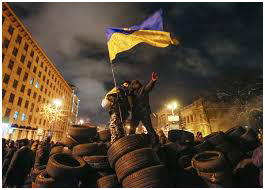
Ukrainian Crisis

images

Late last week, the Swiss announced investigations into funds allegedly held in their banks by former President Viktor Yanukovych  and his son Oleksandr Yanukovych, and have frozen those assets while they determine if any of the assets are proceeds of crime derived from corruption, misappropriated state assets, or derived from other predicate offenses pursuant to anti-money laundering laws.

Viktor Yanukovych came from an impoverished family and held several low-level government administrative positions for decades, earning no more than $2,000 per month before entering politics in 2009. From 2009 to 2014 (a mere 5 years), by conservative estimates he reportedly amassed a personal fortune of $12 billion.

$70 Billion Moved Offshore in 3 years

Government authorities in the Ukraine estimated that the Yanukovych government officials removed approximately $70 billion to offshore bank accounts from 2011-2014.

Yanukovych’s son, Oleksandr, is a former dentist and is reported to have become one of the richest men in the Ukraine during the time his father was President, with a reported personal fortune of $500 million.

$70 billion allegedly left the Ukraine in less than three years in the hands of politically exposed persons when anti-money laundering laws should have prevented that from happening at numerous points along the financial transactional transfer chain as a result of monitoring and reporting required in Europe and Asia by, inter alia, correspondent banks, private equity funds and asset managers, brokers, trust advisors, notaries and money services businesses in the Ukraine, intermediary countries and destination countries.

From a Salary of $2,000 per Month to $200 Million per Month

If the estimates in respect of the sums removed from the Ukraine are accurate, it appears to demonstrate both that international anti-money laundering controls in place may be having little preventative effect, and that there were huge financial institution compliance failures on the Yanukovych file.

The anti-money laundering and politically exposed person rules are designed to detect and prevent the illegal removal of state assets to foreign jurisdictions. Assuming the estimates are accurate, a financial institution dealing with a high profile politically exposed person such as Yanukovych would have had to reconcile the change in his income from $2,000 per month to $200 million per month, document the source of funds and the investigations undertaken in 2009 in respect thereof, and that the financial institution was satisfied as to the legitimacy of the funds and approved continuing to maintain his account.

Politically Exposes Persons

At the moment, the biggest risk regarding the Ukraine for financial institutions is that other politically exposed persons (“PEP“), or military and other government officials in the Ukraine will also export proceeds of crime and in the process, launder funds. There is also the risk that the receipt of funds or property will be prohibited by international economic sanctions.

PEP definitions vary from country to country but generally, a PEP is a head of state, a head of government, member of the Parliament, deputy minister, ambassador and attache, high-ranking military officer, president of government agency, judge, leader of political party in Parliament and the spouses, children, parents, in-laws and siblings of any of those persons.

3 Types of PEPs

The Financial Action Task Force (the “FATF“) in its Recommendations 2012 now has three types of PEPs – a foreign PEP, a domestic PEP and a person who is a senior member of an international organization. The only distinction between foreign and domestic PEPs is that foreign PEPs are foreign to your country. With respect to international organizations, while the organization does not need to be prominent, the function held by the senior person must be a prominent function for the person to qualify as a PEP. The organization is not, by definition, a state-controlled or owned agency (since those are subsumed in the definitions of a PEP (domestic and foreign)).

There is an obvious artificiality with maintaining a distinction between a foreign and domestic PEP because a person can be a foreign PEP everywhere in the world except in their own country. In order to address this, however, the FATF Guidance says that if a person is a foreign PEP, that de facto makes them a domestic PEP in their own country. Logically, this makes sense for crime prevention purposes because in order to export proceeds of crime, the PEP must first use their own domestic financial system and thus, more importance should be placed on domestic, and not foreign, PEPs.

PEP rules flow from national proceeds of crime legislation and are often included in several other laws, including anti-corruption, sanctions, anti-terrorism and other relevant criminal laws and treaties implemented at the national level that must be read together.

PEP Risk Factors 

According the FATF, the risk factors for PEPs include a person who:

  • Is involved in public procurement (as a government official or as company that obtains procurement contracts as part of their business, such as P3 (public-private partnerships).
  • Is in energy (oil, gas, wind energy, hydro) construction, mining, defense, sports or gambling/gaming sectors.
  • Has ties to a Minister of Finance to exert pressure on implementation or enforcement of anti-money laundering laws, ether personally or through economic councils or other bodies.
  • Is involved in large infrastructure projects.
  • Is involved in finance, particularly to government agencies or for government projects.

Many financial institutions have determined that it is too costly, as a matter of compliance, to monitor for PEPs simply because monitoring is both labour and resource intensive. Some banks are closing PEP accounts or refusing to open them.

The ability of PEPs to have removed $70 billion from the Ukraine without any banks stopping them is a whopping failure of global anti-money laundering laws. To put it into perspective, the Ukrainian President’s businesses would have had to have been worth more than Facebook or Microsoft and in 2009, neither Bill Gates or Mark Zuckerberg earned $200 million per month.

Canada’s government-issued Bitcoin, the MintChip

By Christine Duhaime | February 18th, 2014

Update:

The MintChip was cancelled on the day in which its AML consultant and I were scheduled to talk about it at a Bitcoin Conference in New York City and on the local news in New York. My speech was as below, that it was inconsistent for Canada to launch a MintChip when the Minister of Finance was saying Bitcoin was a terrorist financing risk; his speech was going to be that the Royal Canadian Mint had written approval of the Minister of Finance to launch the MintChip without financial regulatory supervision (e.g., it would launch and be subject to no financial regulatory laws). 

Canada’s MintChip

Canada recently announced the prototype of its own official digital currency,  the MintChip, named because it was developed by the Royal Canadian Mint and has a chip, hence “MintChip”.

Similarities to Bitcoin

The MintChip has some similarities to Bitcoin.

Like Bitcoin, the MintChip will not require a proprietary network to authenticate or process transactions. It will be a direct transfer of value from consumers to businesses, or from person to person. But unlike Bitcoin, its value will be stored in a computer chip and transactions will be chip-to-chip.

Identical to Bitcoin, the MintChip will operate with anonymity and transactions will be instantaneous. Interestingly, according to the Royal Canadian Mint, there will not be any age restrictions for its use. And like Bitcoin, will be vulnerable to hacking.

Also like Bitcoin, the MintChip can be used at ATMs, although the processes are different.

MintChips will also make it impossible to process chargebacks, like Bitcoin, and therefore once a transaction is complete, it will be essentially over and irreversible, legally and financially speaking.

Differences to Bitcoin

The MintChip will have some material differences with Bitcoin. For one, it will be backed by the Canadian government (i.e., the Canadian dollar – the Loonie) and the Royal Canadian Mint proposes to have its equivalent collective value in circulation in Canadian dollars to ensure its viability.

For another, it will operate more like an open loop stored-value, or prepaid access product than anything else except that it will have the additional ability of allowing chip-to-chip transfers of cash (or value) and not merely between consumers and businesses. Open loop prepaid access products are branded and may be linked to credit card issuers (Visa) or charge card issuers (American Express), and unlike closed looped prepaid access products, are re-loadable.

Financial Crime

On the financial crime side, the MintChip will face the same issues that Bitcoin faces and for which Bitcoin was recently identified by the Canadian government in the Federal Budget 2014, namely that the anonymity of Bitcoin transactions make it vulnerable to money laundering and terrorist financing and pose a risk to the financial system. But those risks appear theoretically greater with the MintChip than Bitcoin because the MintChip will be much more widely integrated into the financial system and accepted at millions more merchants, resulting in millions of transactions that are outside the scope of regulatory oversight and susceptible to financial crime.

Although the Federal Budget did not articulate this risk, there are salient risks with digital currencies being used to circumvent, inadvertently or intentionally, economic and trade sanctions. The MintChip can be used to deal in property owned or controlled by designated persons or entities and to facilitate financial transactions that are prohibited under, inter alia, the United Nations Act, R.S.C., 1985, c.U-2, or the Special Economic Measures Act, S.C. 1992, c. 17.

There are also tax evasion issues with digital currencies. They include, but are certainly not limited to: (a) as an individual, from prospective capital gains from buying and selling digital currencies; (b) as a merchant, from off-the-books transactions paid for by digital currencies that are not traceable in the normal course; (c) as a prospective immigrant, from undeclared currency transferred to Canada via digital currencies; and (d) as an individual, from receiving money from anyone at any time that is stored in the recipient’s anonymous digital currency wallet or chip.

All of these risks also apply to more traditional anonymous forms of payment such as diamonds, cash and gold, and are by no means new or unique.

On the consumer protection side, the MintChip will also issues  – minors will be able to use it when they lack the legal capacity to comprehend the value of losses they may incur; it will be susceptible to fraudulent online transactions from merchants, hacks or as a result of identity theft, without the ability of consumer protection chargebacks; and the fact that minors can obtain and use a MintChip opens the door to concerns over the facilitation of underage Internet gambling.

Curiously, the fact that the MintChip has the same financial crime and consumer protection risks as Bitcoin that appear incapable of mitigation without fundamental changes to its character, bodes well for Bitcoin acceptance in Canada by the government.

It will be inconsistent for Canada to take a tough regulatory approach to Bitcoin and, at the same time, develop a competitor product with what appear to be the same attendant characteristics of risk as Bitcoin that Canada has identified as requiring criminal remediation with amendments to the Proceeds of Crime (Money Laundering) and Terrorist Financing ActS.C. 2000, c. 17.

And if it moves to legislate against one but not the other, there’s bound to be an anti-trust argument that can be pursued.

Canadian arrested for money laundering after allegedly transporting hundreds of millions by private jet to US & tax havens through lawyer

By Christine Duhaime | February 13th, 2014

Private jets of cash

According to an article in La Presse, Martin Grenier, a Canadian from Repentigny, Quebec, was arrested in Detroit and charged on February 13, 2014, with money laundering along with two Americans, including a lawyer. Grenier is alleged to have facilitated the laundering of so much cash, that private jets were used to transport some of the funds from Canada to the US and then to two offshore tax havens, Panama and the Bahamas.

Also arrested was Mark A. Hopkins, an American attorney from Chicago who is alleged to have facilitated monetary transfers for Grenier. A third person, Mark Jovett Apsey, was also arrested.

The criminal compliant, filed in Michigan, describes how the Drug Enforcement Agency learned of the alleged money laundering activity after intercepting a call involving Apsey in which the latter is alleged to have made arrangements for the courier of a suitcase containing $365,000 cash from New York by Romulus that was intercepted and seized.

Subsequent to the seizure, Apsey is alleged to have contacted Grenier to inform him of the seizure and according to the criminal complaint, Grenier then contacted a lawyer in Quebec to fabricate fake contracts justifying the payment of $365,000 in the US, a form of trade-based money laundering. The fake contract was for services between a jewelry designer in New York and Apsey’s company.

According to this article in La Presse, Grenier ran several businesses, including Knowledge Capital based in Calgary, Beetz Energy based in Laval and Canada Transaction Network based in Quebec.

Canada announces regulation of bitcoin, digital currencies and Internet gambling sites under anti-money laundering laws

By Christine Duhaime | February 11th, 2014

Federal government to regulate bitcoin and other digital currencies

As was widely anticipated, the federal government announced today that it will amend federal legislation to require the regulation of digital currencies like bitcoin in order to eliminate the potential risks of digital currencies being used for terrorist financing and money laundering.

Interestingly, the proposed legislation will aim at eliminating, rather than reducing the financial crime risks, which suggests that businesses involved in the exchange of bitcoin will become “reporting entities” under the Proceeds of Crime (Money Laundering) and Terrorist Financing Act (the “PCMLTFA“), similar to money services businesses, and accordingly, will be required to be registered by the Financial Transactions and Reports Analysis Centre of Canada (“FINTRAC“) and comply with the reporting requirements under the PCMLTFA by, inter alia, monitoring and reporting suspicious transactions and implementing compliance regimes based on site specific risk assessments.

The announcement was made as part of Canada’s 2014 federal budget released today. Bitcoin and other digital currencies were identified as “emerging risks that threaten” anti-money laundering and counter terrorist financing efforts in Canada.

Although few details have been provided, Canada said it would remove the anonymity associated with bitcoin and other digital currency transactions that have any connection to Canada.

Canada not a bitcoin “wild west” 

Earlier in 2013, FINTRAC reportedly issued letters to several bitcoin exchange businesses that expressed the position that the PCMLTFA did not apply to their operations. If such opinions exist, they appear inconsistent with both the PCMLTFA and provincial Securities Acts which, by definition, make bitcoin a securities and therefore subject to that legislation as well as the money services businesses provisions under the PCMLTFA, particularly in respect of bitcoin issued by ATMs.

The content of the letters reportedly from FINTRAC were widely published by bitcoin advocates online and provided to the media, resulting in headlines that Canadian regulators were “welcoming bitcoin” when other G8 countries were taking regulatory enforcement action against digital currencies over money laundering and terrorist financing concerns, as well as consumer protection concerns. A Canadian law firm subsequently published advice on the topic of bitcoin and the PCMLTFA that bitcoin was not subject to regulation and Canada was somewhat of a “wild west” environment.

Contrary to the foregoing, Canada is not the “wild west” – bitcoin exchanges and transactions have always been subject to a variety of regulations in Canada, both federally and provincially. The only issue has ever been the extent to which such transactions trigger the registration requirements under the PCMLTFA for money services businesses.

The Quebec government takes the position that bitcoin ATMs, for example, are governed by the Securities Act, the Derivates Act and the Money Services Businesses Act and it has expressed an intention to prosecute violations in respect thereof involving bitcoin.

Two arrested, including one Canadian, in the 1st state bitcoin prosecution in Florida over alleged money laundering

By Christine Duhaime | February 5th, 2014

In another first for bitcoin, the Miami Beach Police today arrested two men for alleged money laundering involving bitcoin. And one of them is Canadian.

According to police, undercover officers and special agents from the Miami Electronic Crimes Task Force posed as bitcoins buyers and contacted various bitcoin sellers on the website “localbitcoins.com” specifically requesting assistance to “move money” to facilitate criminal activities. Allegedly, the men arrested agreed to assist the agents in moving proceeds of crime “for a fee” of 17% using bitcoin transactions.

Continue reading