According to a new report by Global Financial Integrity, approximately US$872 billion flowed illicitly from Mexico during 1970 to 2010 from money laundering, tax evasion and corruption. The flow of funds represents about 5% of Mexico’s GDP. The report noted that trade-based money laundering was the most common method used to remove money from Mexico illicitly.
Duhaime's Financial Crime & Anti-Money Laundering Law in Canada
French court convicts 5 men for carbon trading fraud and money laundering
Carbon Trading conviction for money laundering
A French Criminal Court has convicted and sentenced five people for money laundering for defrauding the European Union’s carbon trading system of 1.8 billion Euro over loss tax revenue. The defendants were arrested as part of a French investigation into money laundering, fraud and tax evasion in the carbon market that began in 2009, dubbed “L’affaire Nathanal.”
The apparent leader of the scheme, Fabrice Sakoun, was sentenced to five years in prison and ordered to pay a fine of 1 million Euro, and 43 million Euro in damages. His accomplices were sentenced to between a year and four years in prison. During his trial, Sakoun testified that carbon trading was the Lady Gaga of carbon, meaning that the revenues from his type of scheme were similar to revenues earned by Lady Gaga.
It’s Like Leaving a Ferrari on the Street
Another defendant testified that the CO2 market was, by design, inherently and irresistibly suseptible to fraud and money laundering, testifying that: “It is like putting a Ferrari in ‘La Courneuve’ with the keys – it won’t last an hour.”
Collecting the fine may be problematic for France. Several defendants were tried in absentia and most of the proceeds of crime were transferred to Israel. Assets seized thus far include a yacht, a luxury car, seven apartments in Paris.
According to the Court, Sakoun bought carbon rights tax-free from foreign brokers and resold them on a taxable basis (with 19.6% VAT) to firms in France. The tax was retained by the defendants instead of being remitted to the French treasury.
The facility with which people can set up front companies under beneficial ownership schemes and lax internal controls and regulatory oversight are some of the reasons why the carbon market has suffered from fraud and money laundering issues.
Canada proposes further anti-money laundering amendments
The Canadian government announced that it is undertaking a potentially significant revision to its anti-money laundering (AML) and counter terrorist financing (CTF) regime. The proposed changes are in addition to those proposed by the government in November 2011.
In its Consultation Paper entitled “Strengthening Canada’s Anti-Money Laundering and Anti-Terrorist Financing Regime”, the government is proposing amendments that will affect financial institutions, lawyers, life insurance companies, securities dealers, money services businesses, accountants, notaries practicing in British Columbia, real estate sales people and developers, dealers in precious metals and stones and casinos. Continue reading
Omnibus crime bill would allow victims to sue terrorists
Canada’s proposed Bill C-10 (also called the omnibus crime bill), if passed, would allow anyone who suffered loss or damage as a result of a terrorist act to bring an action to recover damages suffered by the person. Recovery is possible from any person, listed entity or foreign state provided there is a real and substantial connection to Canada, or the plaintiff is a Canadian. It will be the first such civil remedy available in law.
A defendant is presumed to have committed the terrorist act if the listed entity caused or contributed to the loss or damage and the defendant committed the act for the listed entity.
Bill C-10, known as An Act to enact the Justice for Victims of Terrorism Act and to amend the State Immunity Act, the Criminal Code, the Controlled Drugs and Substances Act, the Corrections and Conditional Release Act, the Youth Criminal Justice Act, the Immigration and Refugee Protection Act and other Acts, or the Safe Street and Communities Act, has passed third reading in Parliament and will be vetted by the Senate over the next few months.
U.S. Attorney files complaint against Lebanese Canadian Bank in trade-based money laundering case
The U.S. Attorney has filed a money laundering complaint commencing an in rem forfeiture action against the Lebanese Canadian Bank and others, seeking penalties of US$446 million in connection with what it says was a money laundering scheme operated by the Bank.
As part of the alleged scheme, funds were transferred from Lebanon to the U.S. to buy used cars which were shipped to West Africa and sold for cash. The cash was then bulk smuggled to Lebanon. The complaint also alleged that members of Hizballah participated in the scheme. Hizballah is a listed terrorist entity in Canada and the U.S.
According to the complaint, approximately US$329 million was transferred by wire from accounts at the Lebanese Canadian Bank to U.S. institutions.
On February 10, 2011, the Lebanese Canadian Bank was listed by FinCEN as an entity of primary money laundering concern, the result of which meant that the Bank was unable to operate in the U.S. At that time, it had an office in Montreal.
Canada proposes significant new AML regulations
On November 7, 2011, the Department of Finance released a consultation paper on proposed amendments to the Proceeds of Crime (Money Laundering) and Terrorist Financing Regulations (the “Regulations”).
Escort agency charged with money laundering
The U.S. Attorney’s Office and the FBI announced the filing today of money laundering and prostitution charges against several Philadelphia-based companies, R.S. Duffy Inc. and National A-1 Advertising Inc., that allegedly ran an escort service from the website escorts.com. The companies entered into a plea agreement in respect of money laundering conspiracy charges and agreed to the recommended sentence of 18 months, payment of a $1.5 million fine and forfeiture of $4.9 million in property used to facilitate the predicate offences.
According to the criminal information filed against the defendants, the escort agency provided escort services and collected service fees in respect thereof. It also sold Internet subscriptions which allowed clients to view escorts for rent on the website in different stages of deshabille. It collected subscription fees via credit cards, wire transfers, cheques, and other forms of Internet payments. The money paid to Escorts.com was proceeds of crime (the crime being, among other things, prostitution and the sending of funds across state boundaries for an illegal purpose). The defendants apparently then laundered the proceeds of crime by making ongoing deposits at various financial institutions and with investment advisors and investment funds.
Two Somali foreign nationals in the US convicted of terrorist financing
Two Somali women, who became US naturalized citizens, were convicted today in federal court in Minnesota of terrorist financing for providing material support to al-Shabaab, a listed terrorist entity in both the US and Canada. The two women collected funds from Somali foreign nationals in Canada and the US during a three year period and sent the funds to Somalia via hawalas and other money remittance businesses. Amina Farah and Hawo Hassan were convicted of conspiracy to provide material support to the terrorist organization and Hassan was also convicted of making false statements to the FBI, namely that she denied knowing anyone who sent money to al-Shabaab and had never been asked to send money through a hawala to Somalia. They raised funds door to door among the Somali community claiming that funds raised would be used to help the poor in Somalia.
Public Safety Canada has listed al-Shabaab as a terrorist entity because of its links with al Qaida and its terrorist activities that include targeted assassinations and suicide bombings against journalists, civil leaders and government officials in Somali in furtherance of establishing a Somali caliphate.
A hawala is an informal system of money transfer whereby funds are transferred by customers to a hawala operator, called a hawaladar, in one country and disbursed to recipients in another country by other hawaladar associates. Hawalas are considered high risk for money laundering and terrorist financing.
Canadian businessman sentenced in U.S. for money laundering and fraud
A former executive at Bennett Environmental Inc., a Canadian based corporation that treats and disposes of contaminated soil was sentenced to 50 months in prison today for money laundering and defrauding the EPA. The executive, Robert Griffiths, was also ordered to pay restitution of US$4.6 million. Griffiths pleaded guilty in 2009 to defrauding the EPA by inflating the prices he charged to a prime contractor of the EPA and providing kickbacks to employees of that prime contractor from 2001 until 2004. The kickbacks were in the form of money transferred by wire to a co-conspirator’s shell company, lavish cruises for senior officials of the prime contractor, various entertainment tickets, pharmaceuticals and home entertainment electronics. Griffiths laundered approximately US$207,000 in proceeds of crime through a bank account in Ontario.
In 2009, Bennett’s founder John Bennett, was indicted in the U.S. and faces charges of money laundering and fraud. He recently succeeded in obtaining orders from Ontario courts that his corporation pay his legal bills – that decision is inconsistent with U.S. decisions that exempt corporations and their insurers from paying the legal bills for persons accused of being involved in money laundering.
9/11 – ten years later
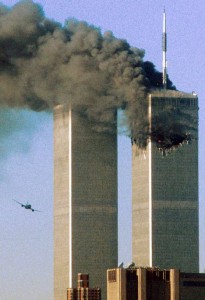 The eve of the ten year anniversary of 9/11 is a good time to look back at the pivotal changes that have shaped our legal landscape in counter terrorist financing. Ten years ago, few lawyers practiced in the area of national security and in particular terrorist financing. Since 9/11, terrorist financing and its companion, money laundering, have become more familiar to jurists and indeed to Canadians. Many believe, however, that despite changes to the law, Canada remains unprepared, legally-speaking, for the potential proliferation of terrorism.
In the 1970s, Europe and the Middle East were affected by increased terrorist activities and as a result, the international community focused its attention on legal mechanisms to address these events. International conventions were adopted to address particular forms of terrorist activity (hijackings, kidnappings, bombings) occurring in different locations. The Convention for the Suppression of Unlawful Seizure of Aircraft and the International Convention against the Taking of Hostages are two examples.
By 9/11, Canada had implemented ten of the then twelve international anti-terrorism conventions into Canadian law largely by codification of relevant offences in the Criminal Code. Despite the potential for a fiat power to permit federal prosecution of national security related proceedings, prosecutions were largely conducted by provincial prosecutors who relied on investigations undertaken by various police agencies at the municipal, provincial and federal levels.
Legal Response to 9/11
Immediately after 9/11, the international legal community responded with Security Council Resolution 1373, adopted on September 28, 2001. It condemned the acts of 9/11 and called upon countries to work together to prevent and suppress terrorist acts, noting the link between money laundering, organized crime and international terrorism. The Resolution directed countries to prevent and suppress terrorist financing and to criminalize the provision or collection of funds that are known or intended to be used for terrorism and to freeze terrorist assets. In respect of persons participating in, or supporting terrorist acts, countries were required to impose punishments that reflected the seriousness of terrorist financing and terrorist activities. Finally, countries were required to exchange information in respect of terrorist financing and money laundering, and to deny safe haven or other forms of support to terrorists or those who facilitate terrorism or terrorist financing.
Canada did not, at that time, have Criminal Code provisions to adequately deal with terrorist financing, or terrorism generally. There were no tools to prevent or disrupt terrorist activities, criminalize the facilitation, preparation or direction of terrorist activities or their financing, nor provide sufficiently strong penalties for terrorist related offences.
Canada’s Legal Response to 9/11
Canada adopted Resolution 1373 by implementing the Regulations Implementing the United Nations Resolutions on the Suppression of Terrorism. It prohibited Canadians from dealing with the assets of listed persons, facilitating transactions with them or otherwise making property or other financial services available, directly or indirectly, for the benefit of a listed person, and to report to the RCMP and CSIS the existence of terrorist property.
Canada also adopted the Anti-Terrorism Act on December 18, 2001 which amended several statutes including the Criminal Code and the Proceeds of Crime (Money Laundering) Act.
The changes to the Proceeds of Crime (Money Laundering) Act (which then became the Proceeds of Crime (Money Laundering) and Terrorist Financing Act) included:
- expanded reporting of transactions where there are reasonable grounds to suspect are related to a terrorist financing offence; and
- expanded information sharing powers of FINTRAC when it has reasonable grounds to suspect that the information would be relevant to investigating a terrorist financing offence or if there are threats to national security.
Changes to the Criminal Code included:
- defining what constitutes terrorist activity (e.g. an act or omission committed in or outside of Canada referred to in the ten international anti-terrorism conventions listed in §83.01(1)(a) of the Criminal Code, or coming within the “made in Canada” general definition of terrorist activity in §83.01(1)(b) of the Criminal Code, namely conduct committed for a political, religious or ideological purpose with a motive requirement);
- defining what constitutes a terrorist group (e.g. an entity that has as one of its purposes or activities, the facilitating or carrying out of terrorist activity or that is a listed entity);
- provides for the listing of entities by the Governor-in-Council when there are reasonable grounds to believe that the entity has knowingly acted on behalf of, at the direction of, or in association with such an entity. Listings are made on the basis of recommendations from the Minister of Public Safety and Emergency Preparedness and once listed, an entity is a terrorist group. Being listed does not in and of itself, attract criminal consequences;
- provides for the delisted of listed entities by application to the Minister of Public Safety and further judicial review of a decision refusing a delisting;
- provides additional terrorist financing offences such as providing or collecting property for terrorism, or providing or making available property or services for terrorism or using or possessing property for terrorism. Certain knowledge and intention requirements are built into the offences; and
- provides mechanisms for the freezing, seizure, restraint and forfeiture of terrorism-related property without requiring a criminal charge or conviction.
Future Changes to Counter Terrorism Law
This week, Prime Minister Stephen Harper said he would resurrect two contentious clauses from the Anti-Terrorism Act that lapsed in 2007 – the recognizance with conditions (known as preventive arrest) provisions which allow police to arrest suspects without a warrant and hold them for up to 72 hours if they have reasonable grounds to believe that a terrorist act will be carried out and reasonable grounds to suspect that the recognizance of the person is necessary to prevent the terrorist activity from being carried out; and the investigative hearing provisions which allow a judge to compel someone with information in respect of a terrorism offence to appear before him or her and answer questions.
This year, the Supreme Court of Canada is scheduled to hear several difficult cases on counter terrorism, including an appeal by Mohammed Khawaja, who was convicted of terrorist financing and other terrorism offences. He was an active member of a terrorist group whose goal was to eradicate western culture in, among other places, Canada, and establish in its place, Islamic dominance. His stated goal was to drain the economies of “kuffars” (a derogatory term for non-Muslims) of their resources, crippling their industries and bankrupting their systems by violent and the random murder of civilians.
The Court has also agreed to hear an appeal by Suresh Sriskandarajah who is appealing an extradition order to the U.S. Sriskandarajan is alleged to have laundered money in the U.S. to provide financial resources to the Liberation Tigers of Tamil Eelan, a designated terrorist organization, and to have engaged in terrorist activity financing. According to a complaint filed in the U.S. District Court for the Eastern District of New York, Sriskandarajan wrote several explicit emails instructing student couriers how to lie and bribe to officials to smuggle equiement for terrorism.
Finally, pursuant to its adoption of Resolution 1373 and the FATF standards, Canada is likely to take measures to address its record in combatting terrorist financing, including considering whether to amend the motive requirement in the definition of terrorist activity that requires proof of the motive of the perpetrator, a legal requirement that is uniquely Canadian.