The Attorney General of the State of New York, Letitia James, announced yesterday, that her office obtained an injunction and an order for documents in Court against a large international digital currency exchange called Bitfinex and a number of companies associated with it (namely, iFinex Inc., BFXNA Inc., BFXWW Inc., Tether Holdings Limited, Tether Operations Limited, Tether Limited and Tether International Limited, collectively “Bitfinex“).
Ex parte injunction granted on basis of alleged fraudulent practices
The order, obtained ex parte, was for two things – an injunction, partially worldwide, for the preservation of evidence and was sought preliminarily on application of the AG stating that her office intends to commence litigation against Bitfinex and an order of production of records. With respect to the injunctive relief, such an order is unusual pre-filing of a claim. To obtain injunctive relief ex parte in these circumstances, the petitioner must show, for example, that if notice had been given to a respondent of the petition, there would be a risk of the purposeful destruction of documents to defeat the rule of law. The AG successfully argued that an ex parte injunction was justified because of the alleged fraudulent practices of Bitfinex.
According to the Court filings, Bitfinex created, owns and operates something called Tether, which is a type of digital currency bought, sold, traded and held for liquidity, on its digital currency exchange and on several others worldwide.
The petition and the US$850 million
According to the Petition filed in support of the order, many of the Bitfinex corporate entities are registered in BVI and they provide services in several countries.
The Bitfinex group is allegedly owned, operated and controlled by just a small group of executives and employees. The AG believes some of those persons are in New York.
According to the Petition, Bitfinex represented to investors of digital currencies using its services, that every Tether was backed by US$1 which was held in reserves, and therefore presumably there was no risk of investing in a Tether since every Tether purchase was backed by an equal amount of USD. The Petition also states that customers were informed that they could redeem each Tether for US$1 at any time – in essence, the value of the investment will never vary and was a completely liquid asset. There are 2.6 billion Tethers issued and outstanding, meaning that Bitfinex has, or represents that it has, in its reserves for cashing out at anytime, US$2.6 billion.
According to the Petition, Bitfinex acquired a bank account in the Bahamas in November 2018, and represented at that time that its issued and outstanding Tether was fully backed by USD and was “safely deposited” in its bank accounts.
According to the Petition, Bitfinex alleges that sometime in 2014, it began processing payments through a company called Crypto Capital, alleged to be based in Panama and by 2018, allegedly had on deposit with that payment processor over US$1 billion but never signed a letter of intent or a payment processing contract or an account opening contract with the payment processor. They appear to have had a verbal or email-based agreement. Bitfinex says they used other payment processors as well, owned by their insiders.
Bitfinex says it was required to use payment processors because no bank would bank it. Bitfinex had previously been de-risked by Wells Fargo in New York, who was the correspondent bank for a series of little banks in Asia that Bitfinex used.
According to the Petition, by October 2018, Bitfinex was low on cash. Allegedly, by this time, Bitfinex had US$850 million owed to it by Crypto Capital and was allegedly told by Crypto Capital that the US$850 million was in a bank and had been frozen by, among others, Polish bank authorities, but the Petition states that Bitfinex did not believe in the truth of the statement by Crypto Capital that funds were frozen.
A one minute review of the website of Crypto Capital is not inspiring and suggests that it is not what it purports to be. Pursuant to its website, it says it was incorporated in 2013 in Panama and that its issued and outstanding shares are owned by an entity registered in Switzerland. According to Swiss government documents, that Swiss parent co. appears to have taken over an existing company and completed a name change. According to its website, Crypto Capital is a “registered financial institution” in Switzerland, which is unlikely to be an accurate statement because its funds would not be frozen by a colleague bank in the EU without notice if that were the case. Moreover, there is no record of its registration as a financial institution by FINMA in Switzerland, or of the parent co. The Swiss government issued a “no registration” notice a month ago to warn the public that an entity called “Crypto Capitals” in Basel (slightly different name, different city and different website), was not FINMA registered as a financial institution. The VAT registration of Crypto Capital’s parent co. was cancelled a few years ago, according to records in Switzerland, which also makes it unlikely that it is a registered financial institution in Switzerland. According to the website of Crypto Capital, it accepts MasterCard, which is unlikely to be an accurate statement. Crypto Capital’s website represents that it handles “KYC/AML/SAR verification” which makes no sense. SAR means suspicious activity report and there is no such thing as a SAR verification. SARs are filed with a FIU, not verified. Crypto Capital’s website says it is licensed to handle customer’s funds, which is unlikely to be a true statement. The website seems comprised of a series of misrepresentations and it is difficult to believe that any corporation would do business with it.
No known litigation to recover US$850 million
There do not appear to be any lawyers or law firms acting for Crypto Capital, a significant red flag, if the allegations about the unobtainable US$850 million are true. It is not known why it does not have legal counsel.
The AG suggests that Crypto Capital signed off on a type of a loan assignment deal commenced by Bitfinex whereby the US$850 million that Crypto Capital allegedly owes one Bitfinex entity was assigned to another Bitfinex entity. It is unknown if the assignment is an equitable assignment or a legal assignment and whether the proper party was discharged, or if security was taken for the assignment.
According to the Court filings, it was the assignment of the alleged debt with the payment processing partner that prompted the AG to act fast to obtain an order ex parte.
Bitfinex employees and contractors ordered not to destroy documents or deal in money or property
Upon hearing the arguments and reading the Petition in New York this week, the Court granted the order sought by the AG against Bitfinex for injunctive relief and to compel delivery of documents and records.
With respect to the injunctive relief, all the employees, agents (including presumably lawyers who are agents but that is not clear), officers, directors, contractors and principles of Bitfinex, wherever situated, including Canada, are restrained from violating the law and the order.
They are all specifically restrained from engaging in fraud or from attempting to obtain money or property by false pretences and enjoined from using any device, scheme, or artifice to defraud or to obtain money or property by false representations or promises. It includes a prohibition against Bitfinex employees and contractors in respect of accessing of the US dollar reserves of Tether, paying any employees, contractors, agents from funds associated with the Tether US dollar reserves, and from moving, removing or destroying documents or records wherever situated in the world, including Canada.
Bitfinex ordered to produce trading, banking, corporate and other records
With respect to the order to compel documents and records, Bitfinex is compelled to appear in Court in New York on May 3, 2019, with the following in its possession to deliver up to the AG in front of a Judge:
- A list of all Bitfinex’s banking relationships wherever situated in the world;
- A list of all digital currency exchanges with whom Bitfinex has or had an account or traded or provided digital currencies or liquidity to, wherever situated in the world, including Canada not tied only to Tether but any dealings with any digital currency exchange in the world;
- A list of all other parties or persons with whom Bitfinex traded, wherever situated in the world, whether such trade was in respect of digital currencies or fiat;
- Documents previously requested from the AG and outstanding from November 2018;
- Documents previously requested from the AG and outstanding from February 2019;
- Documents in connection with Bitfinex users, accounts, clients, or customers with a connection to New York state or that hold or held the digital currency Tether;
- Documents in respect of anyone with a connection to New York state and a business connection to Bitfinex;
- All documents and communications in connection with any transaction whatsoever, financial or otherwise, related to loans, credit, pledges, claims, etc., connected to Tethers, Bitfinex or any other entity;
- Wherever located, all documents and communications in respect of all transactions of any nature to buy, borrow, disperse or loan Tethers to or from third parties wherever located;
- Since January 2018, all evidence of any customer requests, orders or demands for fiat withdrawals on the digital currency exchange with all of the requisite details in connection with the request including those customer requests that were unfulfilled;
- Since January 2017, all documents evidencing every single customer or non-customer order or request (online or OTC) to buy, issue, trade or redeem Tethers including all of the wallet addresses of the persons to where the Tethers were exited to or from where Bitcoin was sent to Bitfinex for that transaction, and the names of the customers and status of the customers’ requests;
- A list of customers affected by the alleged payment processing arrangement with Crypto Capital;
- Tax filings, wherever situated for 2017 and 2018; and
- Weekly reports on the cashing out of Tethers from the digital currency exchange.
Bitfinex’s response
In respect of the ex parte order, Bitfinex published a statement on its website, inter alia, that:
- The allegation that US$850 million is lost is untrue and that all of the funds are accounted for, just not available and the US$850 million is safeguarded; and
- Bitfinex has fully cooperated with the AG’s office and cooperates with all regulators.
Extension to comply?
I highly doubt that Bitfinex will be in a position to comply with the terms of the order to provide the whole of the documentation by the deadline. I suspect they will ask for an extension of six months to comply. To compile, index and provide just the list of wallet addresses where digital currencies entered Bitfinex for the purchase of Tethers and where they then exited to another exchange or to a private offline wallet, would take at least 30 days to prepare for a digital currency exchange that is organized with modern systems and that is just one request of more than 15 line items that Bitfinex must deliver to the AG in Court.
Several months ago, the AG for New York released the first-of-its-kind integrity report in which it commented on the risks associated with digital currency exchanges to residents of New York. Bitfinex was one of the exchanges that it determined was lacking in several respects.
 For years now, people in the digital currency space have expressed concern about digital currency exchanges and digital currencies being abused for terrorist financing. Another report, this time from researchers at BellingCat, have apparently traced the use of a digital currency exchange directly to a terrorist group. Terrorist financing is not only prohibited and a criminal offence, the dealing in digital currencies or money of a terrorist group is also prohibited and an offence and such property must be immediately frozen and reported to the relevant federal agency in the country in which the Bitcoin is received (in this case, wherever Binance declares it has its legal jurisdiction, or its seat).
 Mr. Ward was arrested at his beach-front home. Police seized several luxury cars, $100,000 cash, cocaine and drug trafficking paraphernalia.
 He self-published numerous videos about his luxurious lifestyle, his Lamborghini and his estate, explaining about how he was a rags-to-riches guy who earned all his own money through his own sweat. Mr. Karagiozis liked to say, on speaking tours, that no one believed in him but him.
 Jenny Ambuila, a Colombian foreign national, was arrested by Colombian federal police for suspected money laundering. She posted many images of expensive purses and 5 star hotel stays in the EU as well as the purchase of two luxury cars – a Porsche Cayenne and bright-red Lamborghini Huracán - while unemployed in Miami. The two luxury cars were worth US$400,000. She was arrested at the El Dorado International Airport.
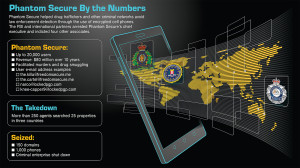 Phantom Secure provided Blackberry devices and an encrypted service to the top echelons of transnational organized crime and terrorist organizations to allow them to conduct drug trafficking activities undetected around the world. It did so by using multiple VPNs with servers in Panama and by custom managing the entire communication chain for gangsters. For example, it could remotely wipe data from Blackberry devices on behalf of gangsters if they were arrested or compromised. Technology wise, Phantom Secure re-configured Blackberry devices to limit their functionality so that they could only be used for limited functions and therefore, they could control the communications and ensure access to law enforcement was restricted by encryption.
 In October 2018, Ramos pleaded guilty to conspiracy in California to conducting a criminal enterprise and admitted he assisted drug traffickers to traffic and distribute drugs around the world. On his own encrypted device he texted: “We are fucking rich man…Sinaloa cartel, that’s what’s up.”
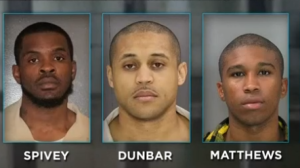 Agents from
 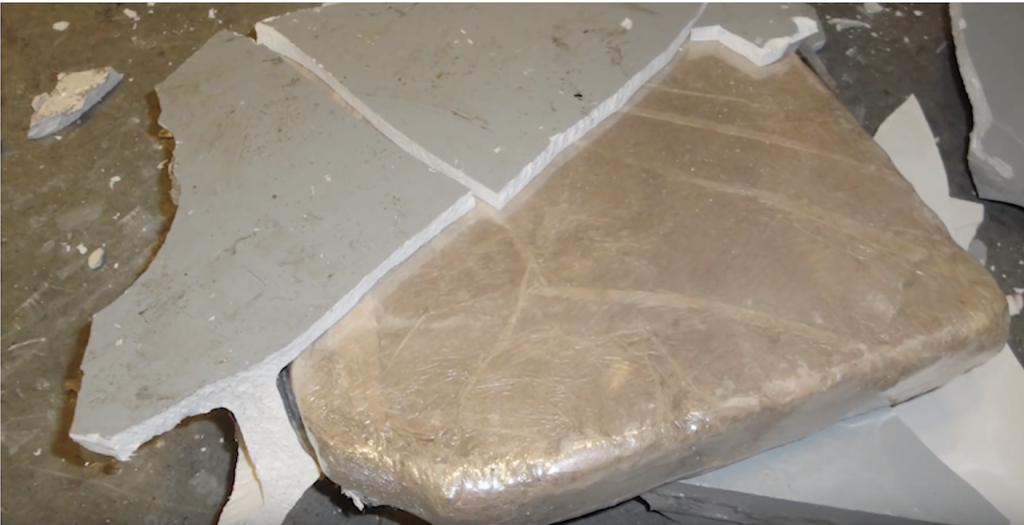 The Bulgarian police have
  The Iran Telecommunication Research Center is interesting for another reason – according to its own website, it facilitated the introduction of Ericsson’s 5G to Iran in 2017, and tested 5G for government officials (see the photo attached from the Ericsson event in Tehran of a military aircraft with 5G on the wings). Iran’s Irancell and Ericsson signed an agreement for 5G in Iran in 2017 to make it available in Iran by 2020. Irancell is a government owned and controlled organization, said to be allegedly controlled, if not owned, by the Islamic Revolutionary Guard Corps.
 China’s