In 2015, more countries become terrorist hotspots; Canada moves up ranks to become 35th in terrorism threat index; US moves up to 17th place

By Christine Duhaime | July 5th, 2015

US and Canada move up on the terrorism threat index

2014 and thus far in 2015, have been marked by a dramatic increase in terrorist incidents and in the number of countries that have been pulled into terrorist activity and for which financial institutions have been used for terrorist financing. Western countries are becoming less safe, as they increasingly become targets of terrorist attacks, or attempted attacks. They are also being used more than ever before as a breeding ground to radicalize terrorists in the West over social media (see the “Twitter Terrorist” for more) to defect and to undertake domestic lone wolf attacks.

Canada, for example, now ranks 35th globally on the country terrorism threat index released on July 5, 2015, ahead of (more of a risk than) Mexico, the Palestinian Territories, Thailand, and Sierra Leone. China ranks 36th and Turkey ranks 34th. Spain, which ranks 33rd, just issued a “maximum alert” for terrorism saying that the country was at the same level of terrorism risk as the Madrid attacks in 2004.

The US now ranks 17th under the country terrorism threat index. According to the US Committee on Homeland Security, since early 2014, there have been 47 planned or executed terrorists plots against Western targets, including 11 inside the US that were inspired by ISIS. Moreover, there have been more ISIS-linked plots against Western targets in the first half of 2015 (28 thus far), compared to all of 2014, in which there were 19. The number of “home grown” terrorist plots have tripled in the US in the past five years.

The country threat index is an artificial intelligence created risk assessment based on numerous inputs including messages from terrorist groups and injuries and threats that have occurred. It is created by the Intel Center Database and is updated in 30-day increments.

High risk generally for terrorist attacks

Countries in which there is a high risk of a terrorist attack, and terrorist financing, include:

  • Syria
  • Iraq
  • Nigeria
  • Somalia
  • Tunisia
  • Yemen
  • Libya
  • Afghanistan
  • Pakistan
  • Ukraine
  • Egypt

Terrorist safe havens for financing and illegal movements

Terrorist safe havens are pockets within countries where terrorist affiliates offer safe haven services (financing, terrorist banking, passage of terrorists, fake identity, movement of other people and goods illegally). They are  at risk for terrorist financing and commercial and immigration fraud, as well as money laundering. According to the US Committee on Homeland Security, the key safe havens for terrorist organizations, and of concern for fraud and terrorist financing, are as follows:

  • Afghanistan
  • Algeria
  • Egypt
  • India
  • Indonesia
  • Iraq
  • Jordan
  • Kenya
  • Libya
  • Lebanon
  • Nigeria
  • Palestinian Territories
  • Pakistan
  • Philippines
  • Russia (North Caucasus)
  • Somalia
  • Sudan
  • Syria
  • Tunisia
  • Yemen

High risk for terrorist attacks on tourists in select locations

According to the Foreign & Commonwealth Office, the following are high risk in certain locales for terrorist attacks that may affect tourists:

  • UK
  • France
  • Thailand
  • Spain
  • Israel
  • Australia
  • Lebanon
  • Indonesia

High risk for terrorist attacks at hotels

According to the Intel Center Database, the following are the countries with the highest incidents of hotel terrorist attacks in 2015:

  • Somalia
  • Libya
  • Afghanistan
  • Yemen
  • Tunisia
  • Kenya
  • Columbia
  • Egypt
  • Iraq


The FIFA scandal and why banks may be facing regulatory issues over KYC failures

By Christine Duhaime | May 31st, 2015

FIFA Indictment against PEPs

The 47-count Indictment against 14 persons employed or engaged by FIFA by the US District Court for the Eastern District of New York (“EDNY“), and their arrest may do more than shake up international soccer – it also has the potential to result in significant fines against many global banks who processed transactions for the indicted persons for failures of anti-money laundering law. US authorities announced charges against nine FIFA officials and five sports executives associated with FIFA, who were part of a scheme in which they received $150 million in bribes for commercial rights to soccer.

FIFA is the international body governing organized soccer and is registered under Swiss law and headquartered in Zurich.    The Indictment alleges that the defendants solicited, offered, accepted, paid and received bribes and kickbacks acting in their capacities as affiliates with FIFA and engaged in fraud and money laundering in respect of the proceeds of crime. In addition, they are alleged to have corrupted the sport of international soccer.

According to the Indictment, in order to hide the proceeds of corruption from being detected, the defendants are alleged to have established trusts, set up shell companies, and used banks for illicit payments in tax havens. In 2012, when US law enforcement began interviewing FIFA officials in connection with the investigation, the Indictment alleges that several defendants obstructed justice by, inter alia, destroying evidence. The Indictment alleges that the bribery scheme deprived youth leagues of funds to support soccer and run soccer programs.

KYC & PEP Failures

The banks that processed the transactions that involved money laundering may be facing regulatory issues under anti-money laundering law because the defendants were politically exposed persons (“PEPs“) in multiple countries because they were senior officers of FIFA or business associates of senior officers, and because the transactions were suspicious. Transactions were suspicious because the indicted persons did not earn anywhere near the amounts they allegedly received as proceeds of crime through bank transactions, to justify the transactions, hence money they received was suspicious.

According to the Indictment, the defendants relied heavily on the US financial system and correspondent banks. The US government said it is looking at the banks that are involved. According to the Indictment, just one US bank refused to process one transaction that was alleged to be proceeds of crime. The other banks processed close to $150 million in alleged proceeds of bribery.

Defector from UK to Islamic State releases e-book that sheds some light on trade-based terrorist financing

By Christine Duhaime | May 23rd, 2015

Ebook on ISIS

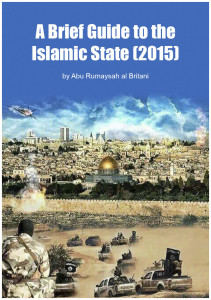
An ISIS defector from the UK has published an e-book called “A Brief Guide to the Islamic State” (2015 Edition) that is posted on a popular social media called Internet Archive and no despite its offensive content and recruitment purpose, no government is ordering social media companies to remove terrorist content.


The Guide is consistent with ISIS terrorist propaganda messages: it gives fictional information on life under the Islamic State to encourage recruitment to Syria; it reveals trade-based terrorist financing; and it ends with threats against the West.

More than anything else, the Guide begs a lot of questions about terrorism and commercial material support from other countries to ISIS controlled areas.

ISIS Trade-based terrorist financing still happening

The Guide, to the extent the e-book is to be believed, says that in ISIS controlled-areas, new cars from Kia and Hyundia and motorbikes from China are imported and sold. It also says that defectors can buy the same electronics they can get in the West including cellular phones, computers, tablets and laptops.

The Guide also says all mobile apps from the West are available for download but that some of the free ones are better (Kik, Ask.fm).  With respect to Ask.fm and Kik, terrorists say that the companies running those apps provide services to them in ISIS controlled areas. It is believed that ISIS may use those services to radicalize others to commit terrorist attacks against the West and to recruit defectors to Syria who are committing acts of terrorism there.

Trying to convince defectors that life is normal

ISIS uses social media to recruit, encourage attacks in the West, socialize Westerners and for terrorist financing. The Guide confirms that the social media campaign of ISIS is meant to “persuade.” So is the Guide. It tells prospective defectors that in ISIS controlled areas, when they walk the street, they will be “loved” and supported, and that the people of Syria will seek their counsel and advice because they are symbols of liberation, suggesting that even the most unaccomplished defector will be a superstar in Syria.

ISIS terrorist propaganda on social media is usually contradictory on the issue of lifestyle. The Guide is similarly inconsistent. The Guide says that ISIS has successfully recruited defectors by honestly focussing on the hardship of life in Syria. But ISIS consistently paints a picture of how amazing life is and promises defectors a life of relative comfort. Even the Guide contradicts its own so-called hardship stance by devoting pages to describe how defectors can buy cafe lattés, cappuccinos, fruit and vegetables, American chocolate bars, new cars and motorcycles in land controlled by ISIS. According to the Guide, there is ample Internet access and the latest technology “gadgets” for sale. According to the Guide, life under ISIS is normal and you won’t want for much in the way of material things.

Threats to West

The Guide ends, as all ISIS terrorist propaganda ends, with the promise that ISIS will descend upon the streets of Washington, London and Paris to spill the blood of, inter alia, Americans, demolish Western landmarks, erase our history, and “most painfully” according to the Guide, convert our children who will then curse us. ISIS will succeed, according to the Guide, because allegedly we lack the stomach to fight ISIS long-term. More than anything, all we seem to lack is the willingness to force social media companies and web servers to remove offensive and destructive terrorist material online.

China to issue guidance for light online payment solutions to preserve emerging FinTech

By Christine Duhaime | April 29th, 2015

The Government of China has announced that it is issuing legal guidance to lightly regulate online payment systems, what it terms as “internet finance.” The guidance will be prepared by the People’s Bank of Canada and will contemplate a regulatory framework for governance.

The impetus for developing guidance is driven by the explosive growth in online financial services and payments in China. Not surprisingly, China is the world’s largest peer-to-peer lending market with 1,400 peer-to-peer lending platforms that have raised $18 billion.

Interestingly, a member of the Chinese government called for light regulation to ensure that innovation in FinTech is preserved and not overly regulated, allowing companies to manage risks.

Mother of the Girlfriend of Mayor of Vancouver held on corruption charges in China

By Christine Duhaime | April 25th, 2015

In the latest twist in the continuous coverage of high-ranking Chinese foreign nationals who immigrated to Vancouver, the mother of the girlfriend of the Mayor of Vancouver has been incarcerated over corruption charges in China.

Here is the story as reported in South China Morning Post.

The Mayor, Gregor Robertson, has a girlfriend who is a current or former (details seem fuzzy), Chinese foreign national named Wanting Qu. She is a singer and is a “tourism ambassador” for Vancouver and her ultimate boss is the Mayor.

Below is a picture of Wanting from her Instagram account.

Wanting’s mother, Qu Zhang Mingjie, was a Chinese government official, specifically the Deputy Director of the Development and Reform Commission of the City of Harbin, China. In September 2014, she was fired from her position and is now incarcerated in China facing a criminal trial. She is alleged to have sold state property at discounted rates to purchasers impliedly in exchange for benefits paid to her. Wanting immigrated to Canada several years ago and told the media that her mother financially supported her studies in Canada. That flow of funds from mother to daughter, from China to Vancouver, and from whence they were derived, may be an issue.

Qu Zhang Mingjie is a politically exposed person in anti-money laundering law. As her daughter, so is Wanting. And the Mayor, as Wanting’s boyfriend, is also a politically exposed person under the FATF policy guidance.

As a politically exposed person (“PEP”), banks in Vancouver, Hong Kong and China that provide services to Wanting, and her mother, are and were, obliged to treat them as high-risk clients and vet and confirm the source of their funds above a certain threshold. That is because, pursuant to policy and research by the FATF, G20 and others, politically exposed persons are at a higher risk for the commission of financial crimes. With respect to parents and children, financial crime typologies show that politically exposed parents often transfer proceeds of crime to their children,  hence children are PEPs by definition. Financial crime typologies in respect of Chinese foreign nationals indicate that they often transfer proceeds of crime to places like Vancouver to pay for the education of their children and buy them luxury homes and cars.

There is no allegation that Qu senior transferred any of the alleged proceeds of corruption, if there are any, to Qu junior. But if Qu Zhang Mingjie is convicted of corruption, the Government of China may become interested in funds in Vancouver. That is because her daughter told the media her mother funded her studies in Vancouver.

China and US agree to cooperate to help China track down & repatriate “economic fugitives”

By Christine Duhaime | April 13th, 2015

Late last week, at a meeting in Beijing, the US and China agreed to continue cooperating in the removal of Chinese foreign nationals from the US who are suspected of having immigrated with proceeds of corruption. The meeting took place between Meng Jianzhu, Secretary of the Central Politics and Law Commission, and national police chief Guo Shengkun, and US Secretary of Homeland Security Jeh Johnson.

Both countries affirmed a commitment to work closely with law enforcement agencies to improve information sharing on repatriation and economic fugitives and provide status updates on active fugitive cases.  China said it was working expeditiously to verify names of its foreign nationals who immigrated to other countries “illegally” to  facilitate their return.

Interestingly, press reports said that both countries are looking at databases to identify Chinese foreign nationals that book travel and request travel documents from other countries. China’s anti-corruption agency said that more than 500 so-called fugatives were brought back to China last year, along with more than RMB 3 billion.

According to the media in Asia, there are two operations called “Sky Net” and “Operation Fox Hunt” pursuant to which China is seeking to have returned its foreign nationals who it believes have left the country with proceeds of crime and/or corruption. During the Beijing talks, the US affirmed it would not provide a safe haven to Chinese foreign nationals suspected of entering the US with proceeds of crime.

The talks also touched on counter-terrorism, intellectual property rights, maritime law enforcement and cyber-security.

DEA & Secret Service Agents in Silk Road investigation arrested for stealing $1 million in Bitcoin

By Christine Duhaime | March 30th, 2015

Two  US government agents in Silk Road investigation arrested for allegedly stealing over $1 million of Bitcoin from Silk Road during the investigation

Two former government agents involved in the Silk Road murder and extortion investigations in Baltimore, Carl Force and Shaun Bridges, were arrested and charged with corruption, money laundering, wire fraud and theft yesterday in California for allegedly stealing over $1 million worth of Bitcoin during the Silk Road investigation, one of whom allegedly transferred the proceeds to a tax haven.

Silk Road was a website accessible only on the TOR network that sold illicit goods and services including weapons, drugs, prostitution services, fake IDs and on occasion, services for hit men. The TOR network is a network on the Internet in which IP addresses are concealed though a router.

Carl Force had been a DEA agent for 15 years, and the lead undercover agent in communication with Ulbricht. Bridges had been a US Secret Service agent for six years and was the computer forensics expert on the Baltimore Silk Road investigation.

Force Allegations

According to the affidavit filed in support of the Criminal Complaint, Force allegedly:

  • Ran illegal criminal history checks for private enterprise, including a Bitcoin exchange company called CoinMTR, for a secret payment of $110,000 paid in Bitcoin.
  • Acted as Advisor to CoinMTR to enable the company to solicit funds from venture capital firms.
  • Directed CoinMTR to illegally seize and transfer $297,000 worth of Bitcoin belonging to another person to his Bitcoin wallet.
  • Fabricated a US Department of Justice subpoena and sent it to a payments firm, PayPal’s Venmo subsidiary, ordering that they release funds Venmo had frozen that were held in his name.
  • Attempted to get Ulbricht to pay him $250,000 if he did not fully complete his investigation and withheld evidence from the US government in respect of its investigation.
  • Sold information to Ulbricht about the Silk Road investigation for $100,000 worth of Bitcoin.
  • Took a large number of Bitcoin from Silk Road during the investigation and transferred it to his own Bitcoin wallet, including a transfer of $235,000 in cashed-out Bitcoin wallet to Panama.
  • Although his annual salary was $150,000, during the Silk Road investigation, he had unexplained income of $757,000.
  • Instructed Ulbricht to encrypt his communications so that his own investigation team could not access them and they could not be used as evidence in a court proceeding.
  • Informed Ulbricht that the US Secret Service had spoken to Mark Karpeles, the owner of Mt. Gox, to identify the owner of Silk Road.
  • Was hired by Ulbricht as a hit man to kill the administrator of Silk Road who was cooperating with law enforcement in the Silk Road investigation.

Bridges Allegations

Bridges allegedly stole $820,000 worth of Bitcoin from Silk Road, cashed it out through Mt. Gox, and transferred the funds to an account held at Fidelity that had been opened under a beneficial ownership structure.

Bridges was apparently both a TOR and Bitcoin expert on the Silk Road investigation in Baltimore, although according to the Criminal Complaint, he did not know how Bitcoin transactions could be traced from currency exchanges such as Mt. Gox, and in early 2015, he asked another company to educate him on that issue.

According to the Criminal Complaint, in April of 2014, the General Counsel of a Bitcoin exchange allegedly called Bridges by telephone to alert him in advance that they were filing a SAR on him, subsequent to which Bridges resigned. Under 31 U.S.C. 5318(g)(2)), it is illegal to alert or inform a person that a SAR has been filed but it is not clear whether it is equally prohibited to alert a person that a SAR will be filed against them.

Two banks allegedly banked Chinese politically exposed persons with alleged proceeds of crime

By Christine Duhaime | March 28th, 2015

PEPs from China

According to this article in the Vancouver Sun, two Canadian banks opened and maintained a bank account for politically exposed persons from China who are now alleged to have laundered $900,000 in proceeds of crime from China to Canada and the US.

The two politically exposed persons are Shilan Zhao (趙世蘭) and her ex-spouse, Jianjun Qiao (喬建軍). They are politically exposed in anti-money laundering law because Qiao was the director of a government corporation in China, Sinograin, and Zhao was his spouse.

US Charges

Zhao and Qiao were indicted in the US a week ago and charged with conspiracy to commit immigration fraud and international transport of stolen funds, as well as conspiracy to commit money laundering. Zhao is additionally charged with one count of immigration fraud in respect of the EB5 immigration program. They are alleged to have done business in Vancouver, including flipping of real estate properties.

Zhao was arrested in the US but Qiao is a fugitive.

France to limit cash and ‘anonymous’ transactions; introduces new law; et mobilise contre le terrorisme avec l’investissement de €736 million

By Christine Duhaime | March 21st, 2015

€736 Million Investment in Counter-Terrorism Infrastructure

Le gouvernement français a décrété une “mobilisation générale” contre le terrorisme, annonçant la création de 2,680 emplois et le déblocage de €736 millions sur trois ans.

Le Premier ministre a présenté des mesures visant à mieux lutter contre les filières suspectes, notamment via internet et dans les prisons, évaluant à “près de 3,000” le nombre de personnes à surveiller.

“Au total, au cours des trois prochaines années, ce sont donc 2,680 emplois supplémentaires qui seront consacrés à la lutte contre le terrorisme dans les services régaliens de l’Etat et dans les juridictions”, a déclaré Manuel Valls.

Sur les 1,400 emplois créés au ministère de l’Intérieur, 1,100 renforceront les services de renseignement. Sont aussi annoncés 950 postes à la Justice, 250 à la Défense et 80 au ministère des Finances, dont 70 aux douanes.

Côté financement, €425 millions d’euros de crédits d’investissement, d’équipement et de fonctionnement ont été débloqués sur trois ans, dont €233 pour le ministère de l’Intérieur et €181 millions pour la Justice.

Le Premier ministre a confirmé la création d’un fichier de personnes déjà condamnées pour terrorisme sur le modèle de ce qui existe pour le suivi des pédophiles et la création de cinq quartiers réservés aux détenus radicalisés.

Il a évoqué un montant de €60 millions pour lutter contre la radicalisation dans les trois prochaines années.

Des “mesures exceptionnelles, et non pas d’exception”, dont une partie sera incluse dans la loi sur le renseignement appelée à être présentée en mars au Parlement, en vue d’une adoption définitive début juin.

Reprenant une proposition de la droite, le chef du gouvernement a proposé d’engager une réflexion parlementaire sur une peine d’indignité nationale, dont la privation des droits civiques, pour les Français condamnés pour terrorisme.

“La République est debout et nous prenons des mesures exceptionnelles, à la hauteur de ces menaces” a dit M. Valls.

Manuel Valls a lancé en outre un appel aux usagers d’internet, principal vecteur du djihadisme, les invitant “à coopérer étroitement avec les autorités pour appliquer les règles relatives aux contenus illicites et au déréférencement des sites illégaux”.

New Law on Surveillance and Data Collection

France also unveiled a new law to allow intelligence forces to monitor and collect the email and telephone communications of anyone suspected of being a terrorist. It would also force ISPs and telcos to allow intelligence agencies to record metadata that would be stored for five years and analyzed for serious criminality related to, among other things,  terrorism, organized crime and economic stability. The law also sets up a national commission that would oversee surveillance requests and information collection.

New Regulations on Anonymous & Cash Transactions

France also announced measures to limit the ability of terrorists to use cash and anonymous payment methods that the Minister of Finance Michel Sapin, said facilitated terrorist acts.

As of September 1, 2015,  the amount of cash that a person can spent at once in France is €1,000 (it’s now €3,000). Banks would also have to report monthly transactions of €10,000 or more to TracFin. ID would  be needed to buy a prepaid card worth more than €250 or to complete a currency exchange of more than €1,000. And virtual currencies will be a “lot better regulated” said Sapin.

American Banker – Why banks should be concerned about hackers taking on counter terrorist financing

By Christine Duhaime | March 11th, 2015

In case you missed it, our article in American Banker‘s Bank Think entitled “We Shouldn’t Be Relying on Hackers to Stop Terrorism Financing” can be read here.

The article discusses the recent phenomena of hackers in #OpISIS taking down the websites of the Islamic State and their stated promise to go after banks engaged in terrorist financing. It also discusses ways in which ISIS is funded and why counter-terrorist financing efforts are failing thus far and why it is of concern that hackers may be targeting global banks and their executives over terrorist financing, raising cyber-security issues.